Common Plastic Drying Mistakes That Cause Injection Molding Defects
Author: Site Editor Publish Time: 2026-10-05 Origin: Site
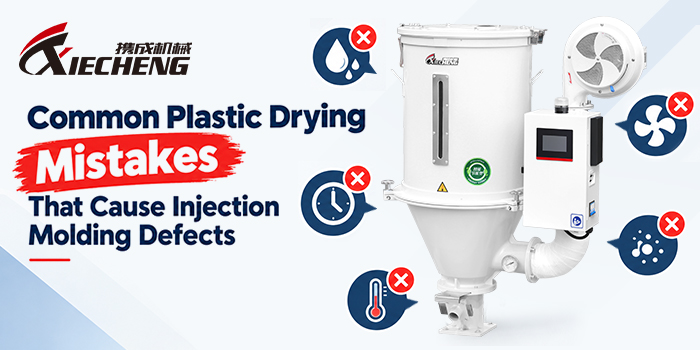
Improper plastic drying is one of the common causes of injection molding defects. Many production problems can be traced back to incorrect drying methods, insufficient drying, or choosing the wrong plastic dryer for the material.
Here are several common mistakes manufacturers should avoid.
× Using Hot Air Dryers for Hygroscopic Plastics
Engineering plastics such as PA, PC, and PET are highly hygroscopic and can absorb moisture from the surrounding air.
A standard hot air hopper dryer may not effectively remove moisture from inside the material. During injection molding, residual moisture can cause hydrolysis, bubbles, silver streaks, and other molding defects.
For moisture-sensitive materials, a dehumidifying dryer is recommended because it uses dry air with a controlled dew point to achieve more effective material drying.
× Insufficient Drying Tim
If the plastic drying time is too short, moisture may remain inside the material. This can result in surface defects, unstable processing, and inconsistent product quality.
Drying parameters should be adjusted according to the material type, initial moisture content, drying temperature, and required processing conditions.
× Incorrect Drying Temperature
The right plastic drying temperature is essential for stable processing.
If the temperature is too high, the material may degrade, discolor, or even burn. If it is too low, moisture may not be removed effectively.
Manufacturers should always follow the recommended drying temperature and time for each resin.
× Poor Material Storage Conditions
Even properly dried plastic can absorb moisture again if it is stored in a humid environment.
For hygroscopic materials, keeping the material in a dry environment and minimizing exposure to ambient air is essential. A well-insulated drying hoppercan also help maintain material temperature and drying conditions before processing.
× Assuming “New Material Does Not Need Drying”
New material does not necessarily mean dry material.
Hygroscopic plastics can absorb moisture as soon as they are exposed to ambient air after the original packaging is opened. Materials such as PA66 can absorb significant amounts of moisture in high-humidity environments.
Therefore, moisture-sensitive materials should be dried according to their actual material condition rather than simply being classified as “new” or “used.”
× Ignoring Dew Point
Dew point is a critical parameter in dehumidifying plastic drying.
A conventional hot air dryer takes ambient air, heats it, and uses it to dry the material. In humid conditions, especially during the rainy season, the air may contain a large amount of moisture. Heating the air does not remove that moisture.
A dehumidifying dryer first removes moisture from the drying air, allowing the material to be dried with low-dew-point air. For many engineering plastics, a dew point of -30°C to -40°C or lower provides the dry-air conditions required for effective drying.
× Leaving Dried Material Exposed to Air
Drying is not the end of the process.
Materials such as PC and PA66 can quickly reabsorb moisture after drying. If dried plastic is left exposed to ambient air for too long, its moisture content can rise again, reducing the effectiveness of the drying process.
For moisture-sensitive materials, dried material should be processed promptly or kept in a controlled dry-air environment.
Choose the Right Plastic Drying Solution
Selecting the right plastic drying equipment is essential for stable injection molding, especially when processing hygroscopic engineering plastics.
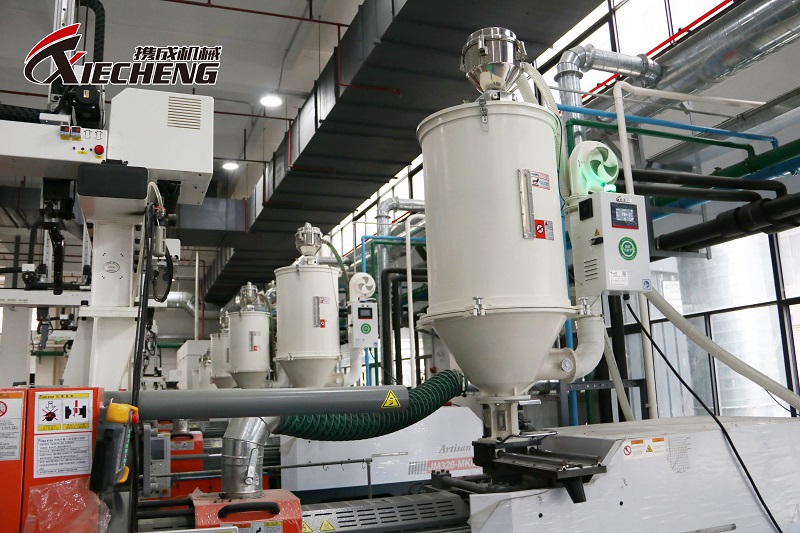
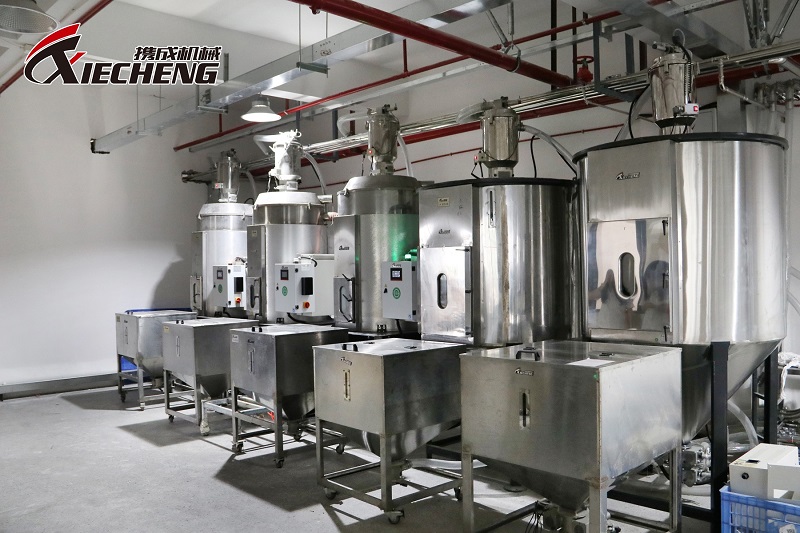
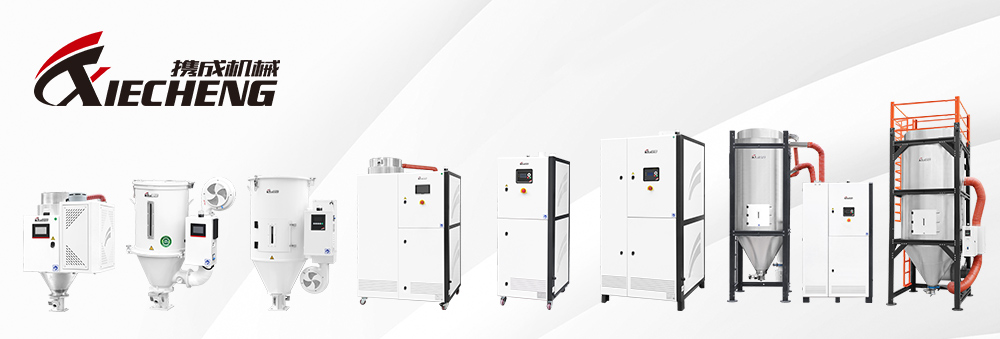
With extensive experience in plastic processing equipment, XIECHENG provides customized drying solutions, including hopper dryers, European-style hopper dryers, and dehumidifying dryers. These solutions help manufacturers achieve stable drying performance, reduce moisture-related injection molding defects, and improve overall product quality.
Improper plastic drying is one of the common causes of injection molding defects. Many production problems can be traced back to incorrect drying methods, insufficient drying, or choosing the wrong plastic dryer for the material.Here are several common mistakes manufacturers should avoid.× Using Hot
As October arrives and China celebrates its National Day, the country is filled with a festive spirit and a sense of joy. On this special occasion, XIECHENG extends our sincere greetings and heartfelt appreciation to our customers and partners for their continued trust and support, as well as to eve
With the refreshing autumn breeze and the full moon of Mid-Autumn Festival, Xiecheng sends its warmest wishes to all employees. May everyone enjoy a happy Mid-Autumn Festival, a joyful family reunion, and a wonderful holiday!Celebrating the Festival with Care for Our EmployeesTo celebrate the Mid-Au