Industrial Chiller Selection Guide for Injection Molding & Plastics Processing
Author: Site Editor Publish Time: 2025-12-01 Origin: Site
In injection molding, defects like sink marks, dimensional variations, or low production efficiency often result from unstable cooling. An industrial chillerprovides precise and consistent mold temperature control, directly affecting product quality, cycle time, and operating costs.
Based on years of experience, Xiecheng presents this practical guide, providing clear guidance on how to select the right chillers for plastics processing.
1.Types of Industrial Chillers
Industrial chillers are commonly classified based on their heat rejection method:
• Water Cooled Chillers
A water cooled chiller is a cooling system that dissipates heat through a cooling tower. It delivers higher long-term energy efficiency compared with air-cooled chillers of the same cooling capacity.It is suitable for continuous production environments with stable water availability and a fixed plant facility.
• Air Cooled Chillers
Anair cooled chilleris a cooling system that uses built-in fans to discharge heat into ambient air, eliminating the need for a cooling tower.
It features flexible installation and is ideal for factories with limited space or where mobility and layout flexibility are required.
To meet the demands of different plastics processes, several structural and functional variants have become widely adopted:
• Low-Temperature Chillers
A low-temperature chilleris a cooling solution designed to provide chilled coolant at sub-zero or extremely low temperatures, suitable for special polymers and heat-sensitive molding processes.
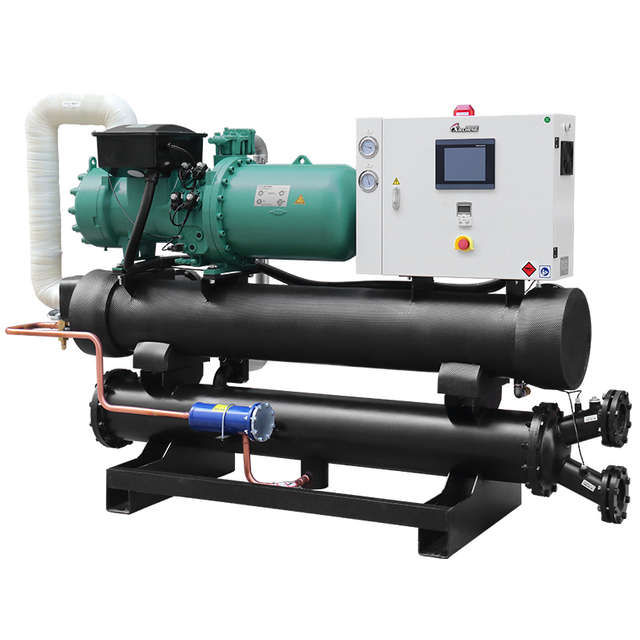
• Screw Chillers (Water-Cooled)
A water-cooled screw chiller is an industrial chiller equipped with a screw compressor, offering stable operation and high efficiency under partial load. It is recommended for medium to high cooling capacity applications.
• Screw Chillers (Air-Cooled)
An air-cooled screw chiller is a screw compressor-based chiller that uses ambient air to dissipate heat, eliminating the need for cooling water systems while maintaining reliable and efficient cooling performance.
• Explosion Proof Screw Chillers
Anexplosion-proof chiller is a specially designed cooling system for hazardous environments such as petrochemical, pharmaceutical, and solvent-handling facilities. It features certified explosion-proof electrical and mechanical components, ensuring safe and stable operation.
2. Choosing the Right Chiller for Injection Molding
Selecting the appropriate industrial chiller for an injection molding production line requires careful evaluation of the following core parameters:
Key Consideration
Explanation & Recommendation
Cooling Capacity
Calculate the heat load based on the injection molding machine’s clamping force, material type, and production cycle to determine the required cooling capacity.
Temperature Control Accuracy
Precision molding requires temperature stability within ±1 °C or better, while standard processes can tolerate ±2–3 °C.
System Pressure & Flow
Ensure that the chiller’s pump head and flow rate meet the cooling water circuit requirements of the mold.
Our engineers can assist you in performing precise chiller sizing calculations to ensure optimal performance.Contact Us!
Rule of Thumb for Injection Molding Chiller Sizing
30# /HR of HDPE
= 1 Ton of cooling
35# /HR of LDPE / PP
= 1 Ton of cooling
40# /HR of PA
= 1 Ton of cooling
50# /HR of PS / ABS
= 1 Ton of cooling
65# /HR of PVC / PC
= 1 Ton of cooling
70# /HR of P.E.T
= 1 Ton of cooling
·The machine has a shot size of 100 lb (≈45 kg).
·The production capacity is 500 hr, indicating continuous output per hour.
3.Common Chiller Selection Mistakes
Mistake 1: Ignoring Long-Term Costs
Consequence: Selecting a low-spec model may save on upfront costs, but the poor performance of core components can result in low long-term energy efficiency and frequent breakdowns. High electricity and maintenance costs will quickly outweigh any initial savings.
Recommendation: Consider the total cost of ownership and prioritize models with high energy efficiency and reliable core components. All Xiecheng chillers use internationally recognized brands for core components, ensuring stable and long-term performance.
Mistake 2: Oversizing Chillers (“Bigger is Better”)
Consequence: Excessive cooling capacity can cause frequent start-stop cycles, accelerating compressor wear, shortening equipment lifespan, creating mold temperature fluctuations, and compromising product stability. It also leads to unnecessary energy consumption.
Recommendation: Select a chiller based on the actual heat load, referring to selection data sheets and leaving a reasonable capacity margin. Our professional engineers can provide a customized chiller solution based on your production data, ensuring efficient and reliable operation.
Mistake 3: Overlooking Environment & Water
Consequence: Using an air-cooled chiller in high-temperature or poorly ventilated environments significantly reduces heat dissipation efficiency. In areas with hard water, standard water-cooled systems are prone to scaling and clogging, reducing heat exchange efficiency and increasing energy consumption.
Recommendation: Evaluate site conditions and water quality. If necessary, enhance heat dissipation design or install a water treatment system. Xiecheng chillers cover a full range of solutions — from standard water cooled and air cooled models to high-efficiency screw chillers, and even advanced Air-Bearing centrifugal chiller units — ensuring precise matching to your process requirements.
Mistake 4: No Room for Expansion
Consequence: Once the production line reaches full capacity, the cooling system may lack redundancy. Future production increases, mold changes, or new material types could exceed the chiller’s capacity, forcing costly equipment replacement.
Recommendation: Leave an appropriate capacity margin when selecting a chiller, or choose modular models that support expansion. All Xiecheng chillers use environmentally friendly R410a refrigerant, supporting intelligent, energy-efficient, and eco-friendly production growth.
You’re on your way to finding the Best Chiller value for your plastics application.Contact Us!
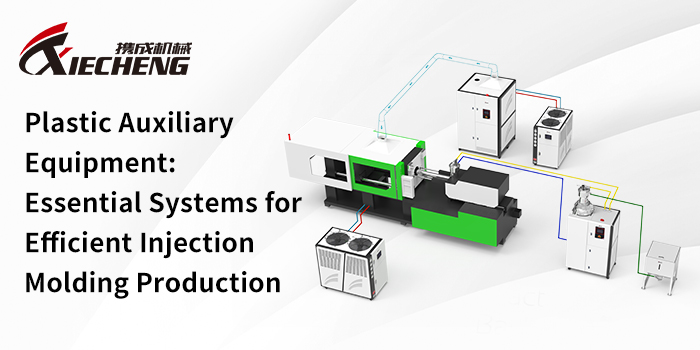
Plastic Auxiliary Equipment refers to supporting machines used with injection molding machines to improve production stability, efficiency, and product quality.These systems handle key processes including material drying, conveying, mixing, temperature control, and recycling. In modern injection mol
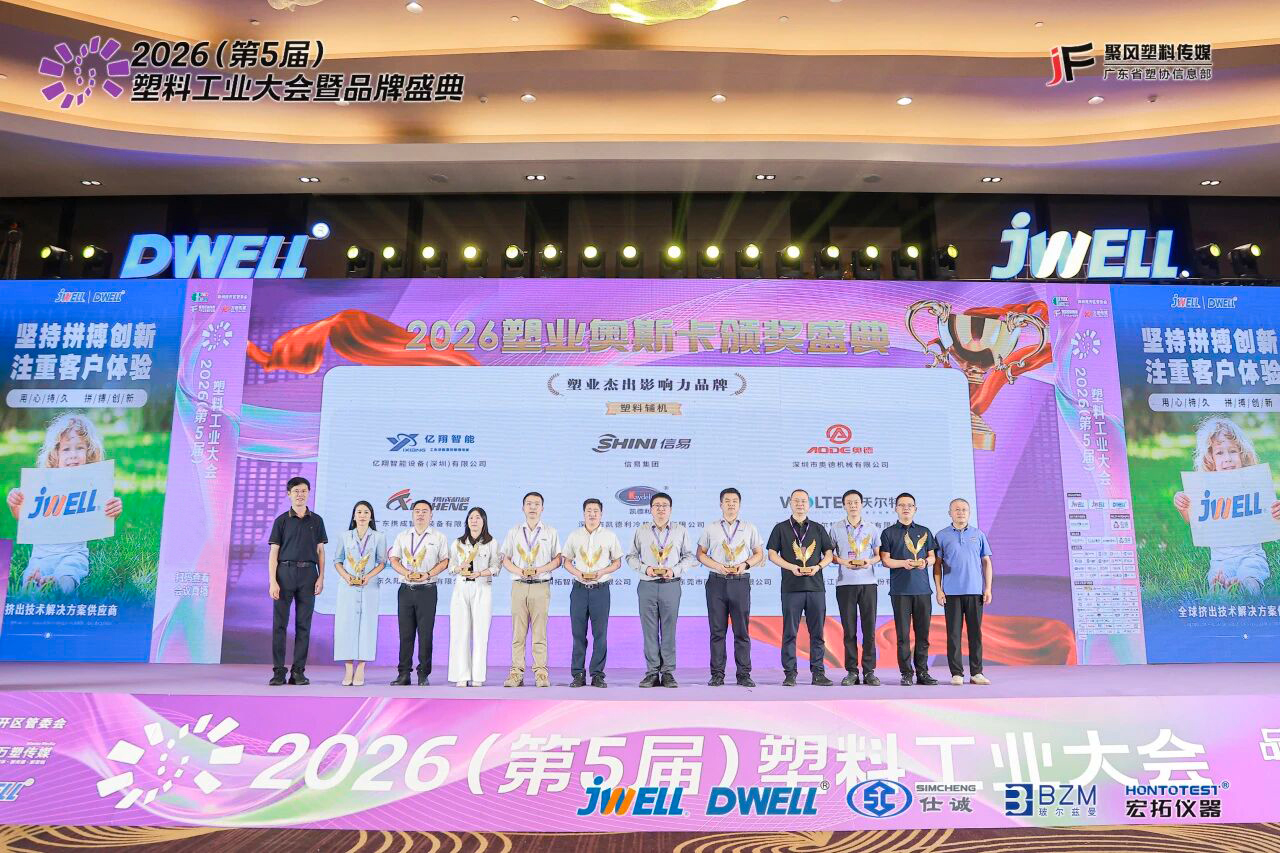
Industry Leaders Gather as XIECHENG’s Brand Strength Takes Center StageOn August 20, 2026, the 5th Plastic Industry Conference & Brand Awards was held in Anhui, bringing together representatives from more than 50 industry associations, over 1,000 business leaders, experts, and scholars to discuss th
Inconsistent mixing ratios, color differences, material waste, and unstable product quality can occur when the wrong mixing machine for injection molding is selected.The right plastic blender depends mainly on mixing accuracy, material combination, production requirements, and automation level. Befo